In other words, a bad presentation can become a “curse” that directly hurts your career. You may be highly skilled, but if you can’t capture and hold attention, your true value will never be fully recognized.
On the other hand, a presentation that is carefully prepared, with clear slides, a structured script, and well-planned interactions can be a career booster: the audience remembers you, trusts you, and new opportunities for collaboration and advancement open up.
So, how do you avoid falling into the trap of boring presentations and instead turn every class or meeting into a memorable experience?
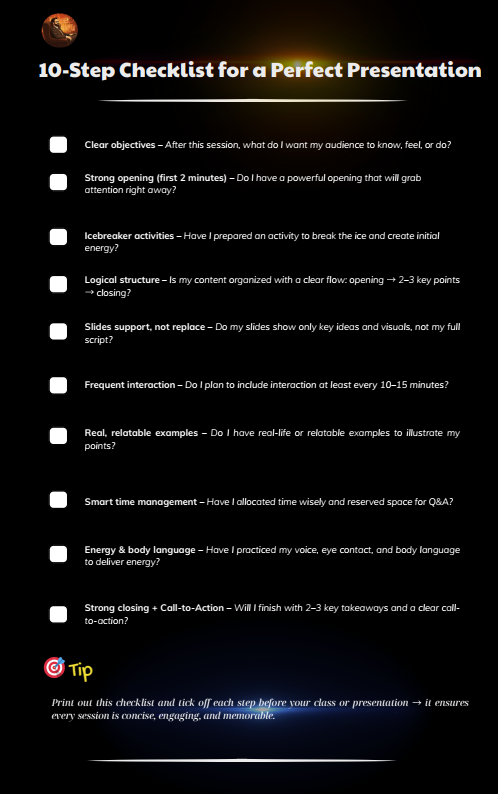
 Here are 10 essential elements for a perfect presentation or lesson — a checklist you can review before stepping onto the stage or opening your slides:
1. Clear objectives
Before you start preparing, ask yourself: “After this session, what do I want my audience to know, feel, or do?”. Clear objectives guide your choice of content, slide design, and activities.
With clear goals, the audience leaves with exactly the message you intended, feeling that the session was meaningful and worth their time.
2. A strong opening in the first 2 minutes
First impressions decide whether the audience is interested or not. A relatable story, a surprising statistic, or a thought-provoking question will instantly grab attention. Miss this “golden window,” and it’s hard to win them back.
With a powerful start, your audience is hooked, eager for what comes next, and you quickly become a trusted guide in their eyes.
3. Icebreaker activities
Starting in silence makes the room feel heavy. Just one simple activity — asking a fun question, a quick poll, or a short game — can break the ice.
A successful icebreaker creates laughter, openness, and connection. The positive energy carries throughout the entire session.

4. Logical, easy-to-follow structure
Our brains struggle with unorganized information. Divide your content into three clear parts: introduction → main body → conclusion. In the main body, stick to 2–3 key points, each with examples.
Done well, your presentation feels coherent and memorable. The audience leaves thinking, “That was so clear and easy to apply.”
5. Slides should support you, not replace you
Slides are your “visual assistant,” not a script to read from. Each slide should only show key points, keywords, or visuals. Too much text shifts attention away from you.
With well-designed slides, people process information faster and see you as more professional, making your message stick.
6. Frequent interaction
People can only focus for 10–15 minutes if they’re just listening. Keep attention by mixing in activities: raise hands, vote, quick questions, or quizzes. Interaction turns passive listeners into active participants.
If done well, the room becomes lively, and everyone feels part of the presentation. This sense of involvement makes the session unforgettable.
7. Use real, relatable examples
Dry theory comes alive with real stories. A personal anecdote, a workplace situation, or a well-known case study builds connection and empathy.
With real examples, the audience sees themselves in the content. They nod, smile, and apply it to their own lives.
8. Smart time management
No one enjoys endless sessions. Allocate time wisely, include buffers, and reserve 10–15% at the end for Q&A. Finishing on time shows professionalism and respect.
With good timing, the session flows smoothly and feels “just right.” The audience leaves satisfied and respecting you more.
9. Energy & body language
You don’t just deliver content — you deliver energy. Speak clearly with emphasis, make eye contact across the room, and move naturally.
With the right energy, the audience stays engaged, follows your every move, and leaves inspired.
10. A strong closing with a Call-to-Action
Don’t end with just “Thank you for listening.” Summarize 2–3 key points, restate the benefits, and invite action — apply a technique, try a tool, or even shift their perspective. This is what they’ll remember most.
A powerful ending leaves your audience clear, excited, and ready to take action. Your presentation stays in their minds long after it’s over.
 Presentation is truly a core skill: it shapes how others see you and directly impacts your long-term career opportunities.
To make it even easier, I’ve prepared a 1-page Printable Checklist. You can download it, print it, and check off each item before every class or presentation. One small step — but it can completely transform the experience for both you and your audience